
Here’s how to find the best outdoor spot at home to start and grow vegetable seedlings from seed in pots and trays – so they thrive.
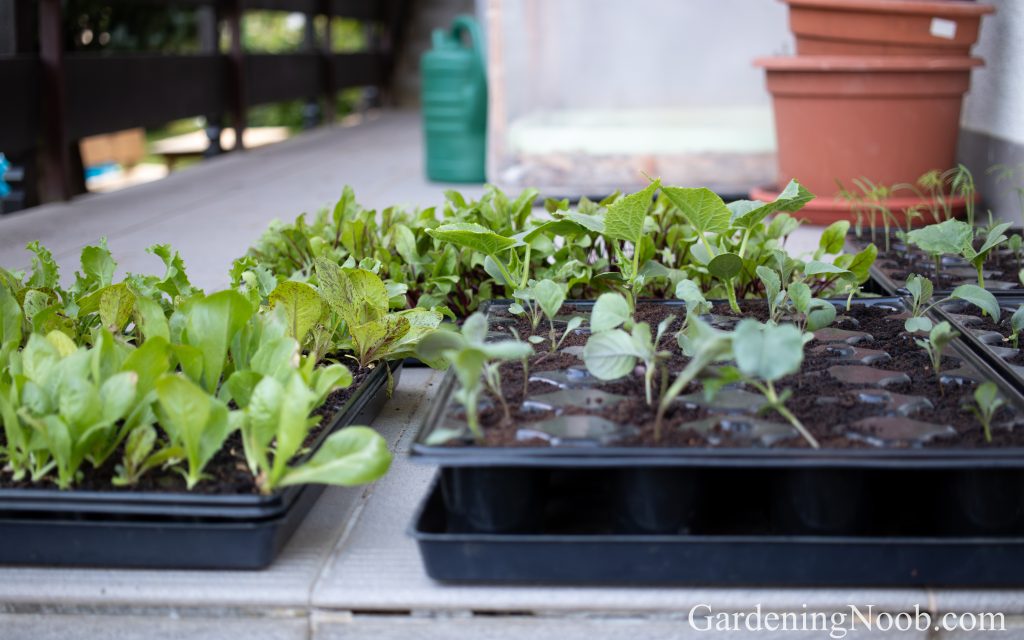
Growing your own vegetable seedlings from seed in pots and trays outside your home is one of the best decisions you can make as a vegetable gardener. It’s incredibly satisfying. And if you do it right, you can raise lots of vegetable seedlings on time, which means faster growth, earlier harvests, and more produce later on. But before you run out and plant your first seeds, there is one key decision to make – where are you going to grow them?
You see, not every outdoor spot is suited for vegetable seed-starting. Choose wisely, and your plants will thrive and set you up for success later on in the garden. Choose wrong, and you will end up with weak, leggy, sick plants – or worse, nothing at all. And that means wasted time, wasted money and a whole lot of frustration…
I admit, I got lucky when I first started. I didn’t put much thought into picking my outdoor growing spot, but by chance, I got it right. If I had chosen the wrong spot, I would likely have failed completely – because a lot can go wrong when you are raising plants in the wrong place. And I might have given up on seed-starting altogether, never to try again. What a shame that would have been!
So, if you don’t want to rely on luck, I strongly recommend reading this guide for choosing an outdoor spot for starting and growing vegetable seedlings. It will walk you through exactly what to look for – so you can avoid common mistakes and give your seedlings the best possible start.
Four key things to look for in an outdoor spot for starting and growing vegetable seedlings
If I were choosing a place to start vegetable seeds and grow seedlings outside again, these are the four key things I would look for:
Plenty of direct sunlight
You can’t get far without the sun. Too little of it slows down the growth of seedlings significantly and makes them easy targets for pests and diseases. You should therefore aim for at least six hours of direct sunlight daily. However, more is not always better. You see, too much direct sun – especially in late spring and summer when it is the strongest – can dry out the soil in pots in a matter of hours. That is where a bit of afternoon shade can be your ally. It keeps moisture in the soil and saves you from watering nonstop. But more on that later in the watering section.
Rain free
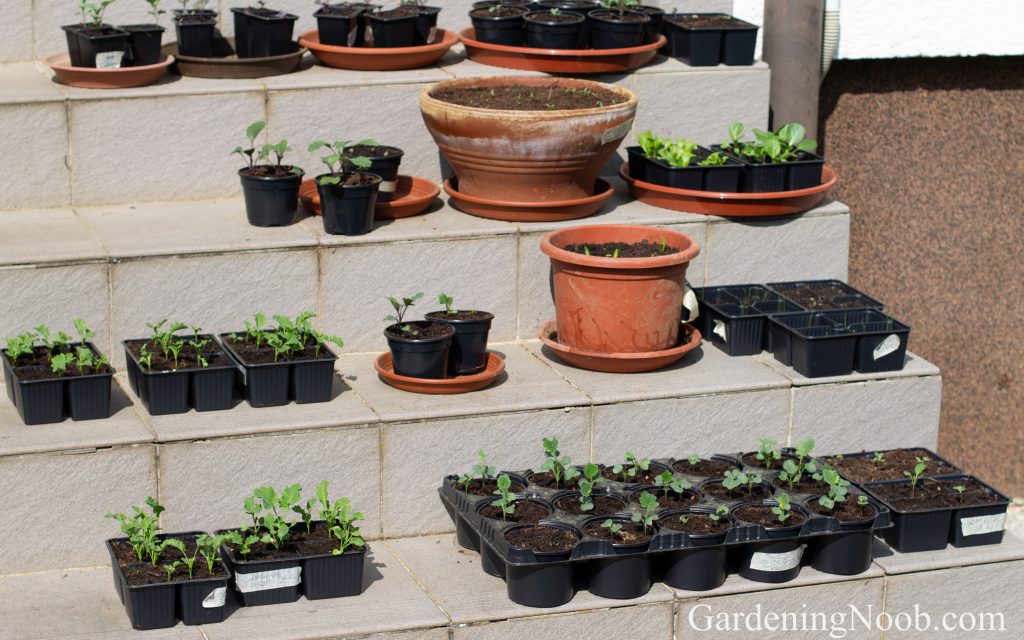
We all know that seedlings need regular watering. However, too much water for too long isn’t good for them either. First, it can drown them by cutting off the oxygen supply to their roots. And second, it creates a damp growing environment that attracts all sorts of pests and diseases, like damping-off for instance. You can easily avoid this by choosing a spot that is naturally protected from rain, such as under a roof overhang that keeps the area near walls dry. This way, you control the watering, and not the rain.
Protected from cold winds
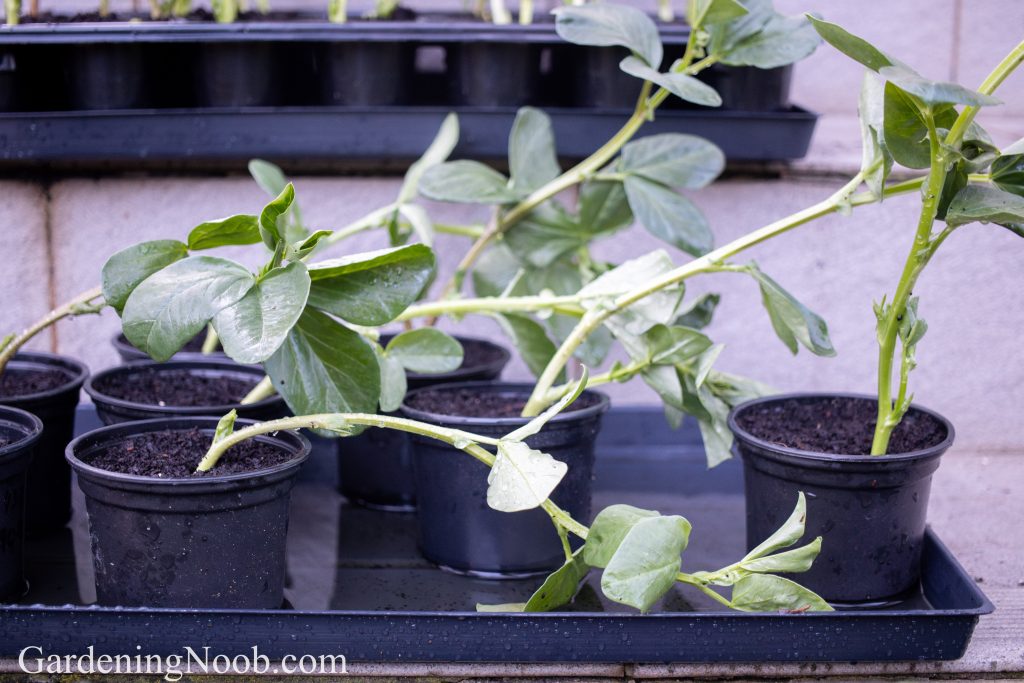
Cold weather with its (near) freezing temperatures poses a big threat in spring. And the winds make the cold feel even worse. Such conditions can easily stress your seedlings to the point of no return – and leave you disheartened after all your work and effort. Obviously, when you are seed-starting and growing seedlings outside in the open, there is nothing you can do about it. The cold weather will be a cold weather…
However, there are ways to protect against it – at least to a certain degree that is. A good starting point is to find a spot around your home that offers natural protection from winds. While air circulation helps strengthen plants, you want to avoid having cold winds constantly blowing on them. It will freeze them to death.
Away from lawns and grasses
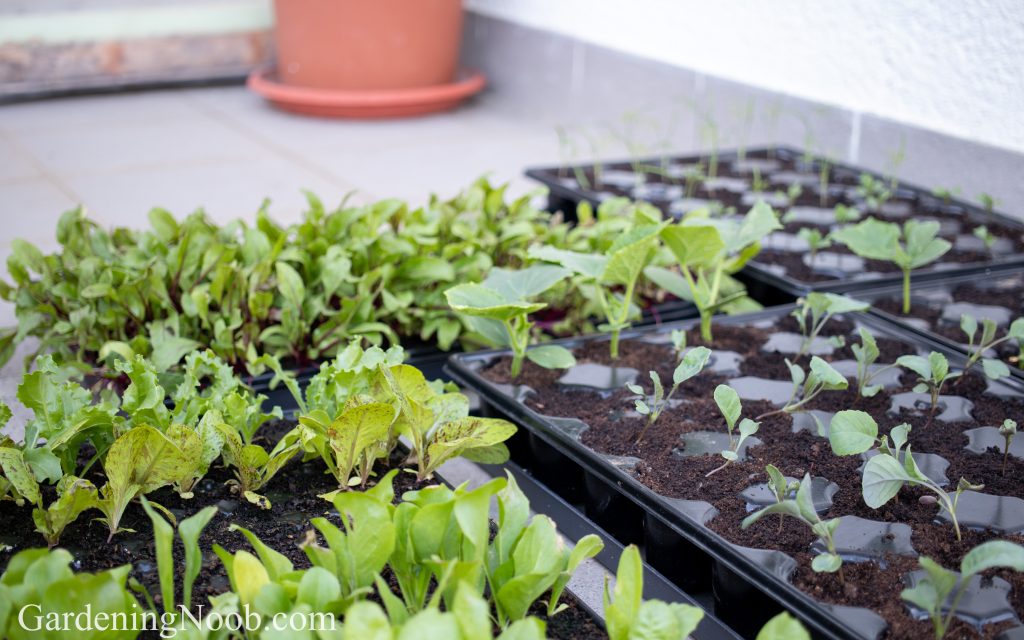
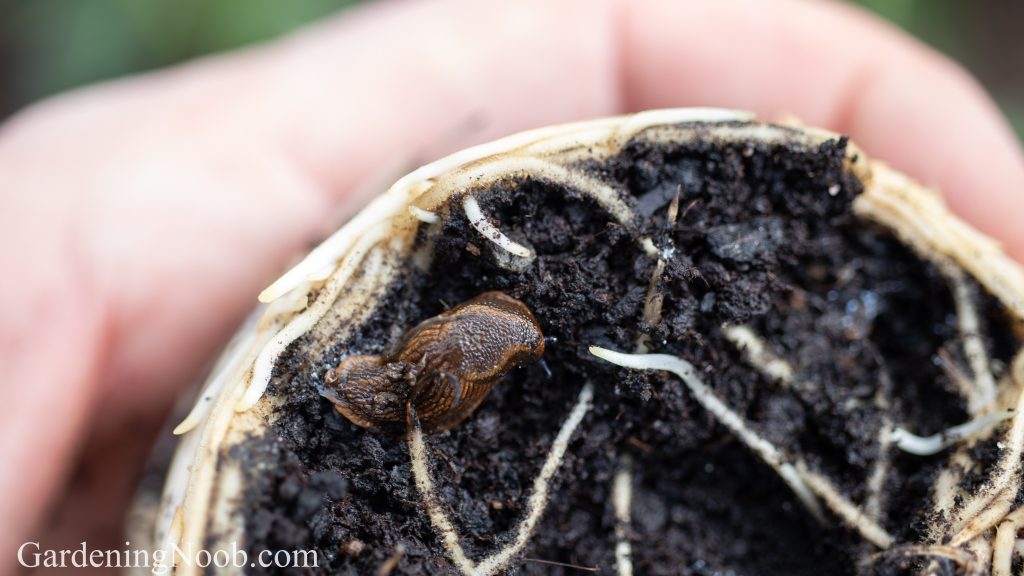
You can get away without wind protection, but plenty of sunlight and a rain-free spot are a must. There is one more cruical point, though. You also need to keep your seedlings off the lawn. If you grow them on grass, there’s a big chance that slugs and snails and other pests will find them and turn them into their next meal.
I keep my seedlings away from the lawn. All my outdoor growing spots are at least one meter (3 feet) from the grass. But even with that precaution, pests still find their way to my plants from time to time. Snails are the most common culprits, but I have also found caterpillars – and both can wreak havoc on seedlings. That is why it’s worth checking the leaves and the undersides of pots, cell trays, and other grow containers every now and then, just to be on the safe side.
Find it on the east-south-facing side of your home – where the morning sun shines and the afternoon shade cools.
In my case, I found the perfect spot on a south-facing, rain-shielded balcony in our backyard. By mid-spring (middle of April), when the days are warm, sunny, and bright, and night temperatures rarely drop to freezing, I can successfully grow pretty much all cool-season vegetable seedlings there – brassicas (cabbage, cauliflower, broccoli, kale and brussel sprouts, kohlrabi and rutabaga) as well as leeks, lettuce and beetroot – without any additional cold protection!
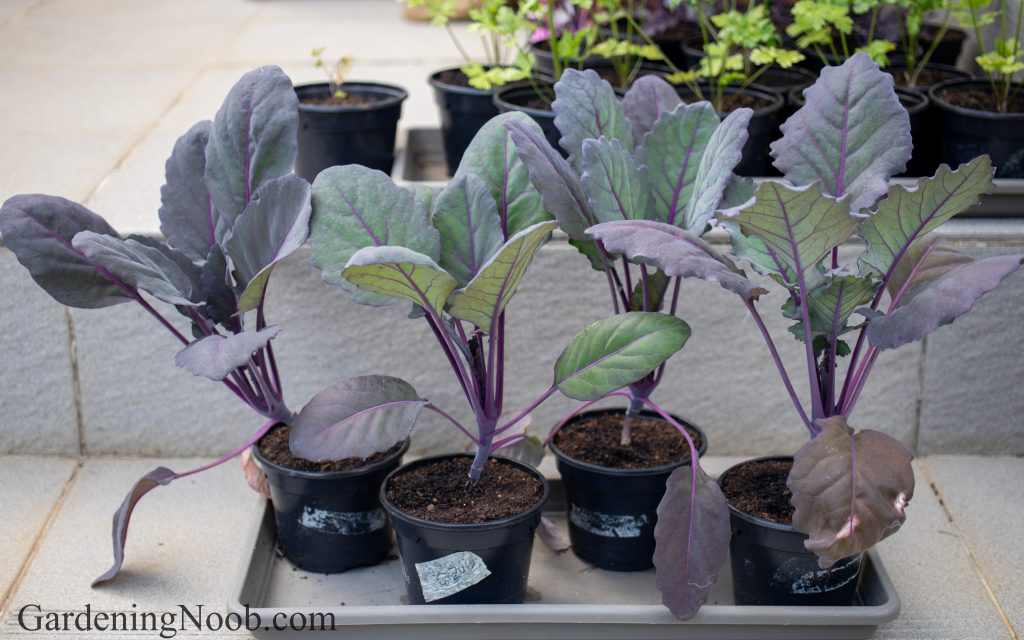
However, I do need to bring the plants inside – or protect them from the cold in another way – whenever a spring frost or cold spell is in the forecast. These unexpected chills can and do occur every now and then – even in the second half of spring (that is from middle of April to the middle of May in Slovenia where I live) when the weather seems to have finally settled and warmed up. The established seedlings might survive, but it is just not worth the risk of losing all that time and growth overnight.
And as I mentioned, cold is not the only threat out there. In late spring, the afternoon sun and its heat can be just as brutal. These days, I check the soil in my pots and trays practically every day. And as soon as it starts to look dry, I water – no excuses. I learned that lesson the hard way by losing dozens of seedlings all at once. You see, one time, I forgot to water for a day, then got busy and didn’t check until the next afternoon. By then, the soil was already bone dry. And the seedlings? All wilted. Lifeless. Gone.
So, think in terms of a balcony, terrace, porch, patio, or veranda. Find a spot on the south-facing part of your home – or even better, east-south-facing. Those areas typically:
- get plenty of warm, nourishing morning sunlight,
- offer natural protection from cold northern winds,
- and provide some afternoon shade so your seedlings don’t overheat.

But whatever you do, stay away from north-facing spots. They receive far less sunlight and warmth, and are much colder than south-facing ones. Grow your plants there, and there is a good chance they will end up leggy, weak and prone to plant diseases like damping-off. Remember, the spot you choose can either make or break your plants…
That’s it. Now that you know what the best outdoor spot to start and grow vegetable seedlings from seed in pots and trays looks like – one with enough sun, rain protection, and shelter from cold winds – go ahead and pick yours. Then jump back into the main vegetable seed-starting guide and continue where you left off. Your future harvest will thank you!