
Discover how I use mini greenhouses to protect my outdoor-growing vegetable seedlings from cold weather and frost in spring
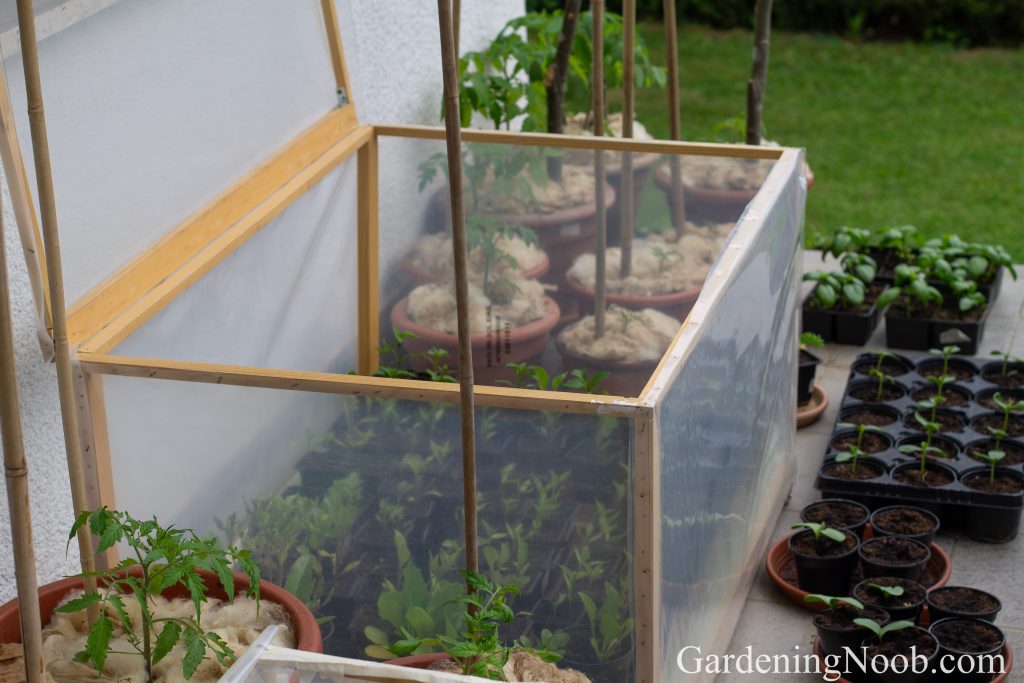
I began growing food in year 2014, and one of my goals since then was to grow my own vegetable seedlings from seeds in seed starting pots and cell trays and then transplant them out to the garden or to the allotment once they get large enough. It took me almost a decade to achieve it, and the miniature greenhouses, as I call them, have played a key role in this transition from buying plants to raising them myself…
With these so called mini greenhouses I am able to protect young vegetable plants from cold when I grow them outside. They help me:
- Start growing cool-season vegetable plants early in spring and keep them outside even when there is frost and night temperatures drop down to freezing point.
- Keep warm-season vegetable plants outside when the danger of last expected frost in spring has not passed yet.
- Even grow cold-hardy vegetables such as lettuce throughout the winter when it is regularly freezing outside.
Now, let me share the exact details of how I use these portable miniature greenhouses as cold protection for plants in my overall vegetable seed starting process. You will discover how they help me get a head start of the vegetable growing season and how you can do the same!
It is difficult to grow vegetable seedlings outside in spring without a proper cold protection.
It was in year 2019 when I first experimented with vegetable seed starting. I planted some broccoli seeds very early in spring, and I placed half of those pots on an indoor windowsill and the other half on an outdoor windowsill of the same south-facing window. The seeds in those pots did sprout into plants and most of them made it to the garden. However, none of the plants really thrived. In fact, I lost lots of them soon after the germination, and the main reason for losing them was cold spring weather.
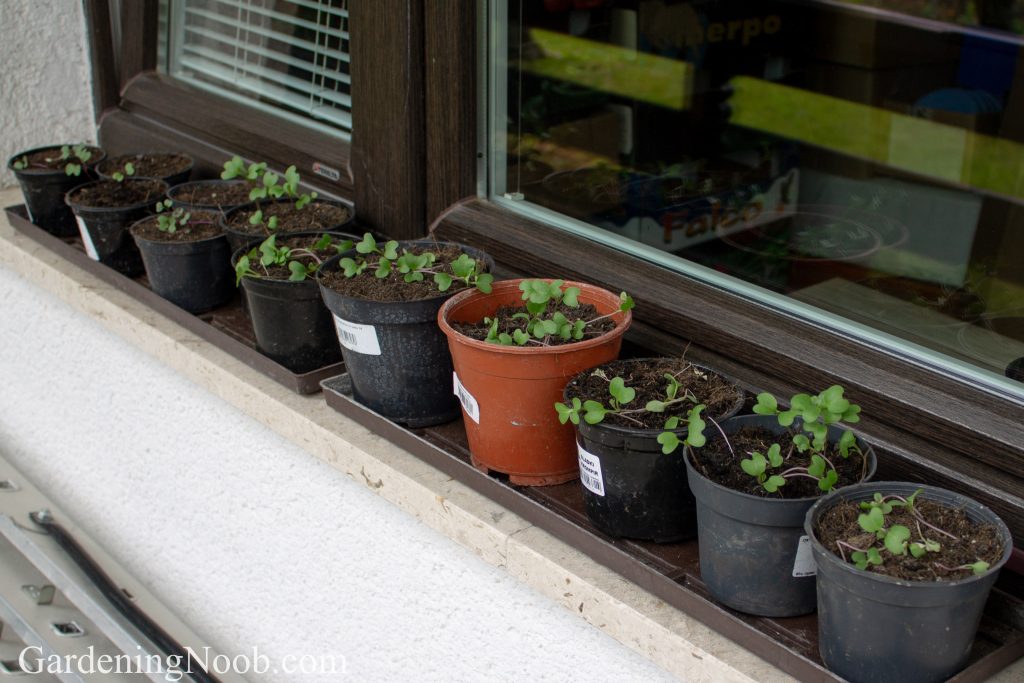
Although that attempt didn’t turn out as good as I hoped, it taught me an important lesson. If I want to successfully grow vegetable seedlings outside in spring when it is prime seed starting time, I need to do something to protect them from the cold.
Honestly, I kind of knew that before. After all, at that point in time, I already had a few growing seasons behind me. But losing those plants definitely confirmed it. The question then became: What could I do to protect plants from the unpredictable spring weather which is often full of frost and cold spells with near-freezing and sometimes even below-freezing temperatures?
I first thought of a full-sized typical greenhouse or polytunnel, but then I realized that we didn’t have enough space for it. Then it struck me that many gardeners use small cold frames to speed the growth of the cool-season vegetables early in spring when night temperatures often drop all the way down to freezing point. If I could insulate something like a cold frame a bit more, place it in a spot which has lots of direct sunlight and is also protect from rain and perhaps wind as well, then it might just work. And this is how the idea for the miniature greenhouse was born…
It turns out that miniature greenhouses work great as cold protection for vegetable plants.
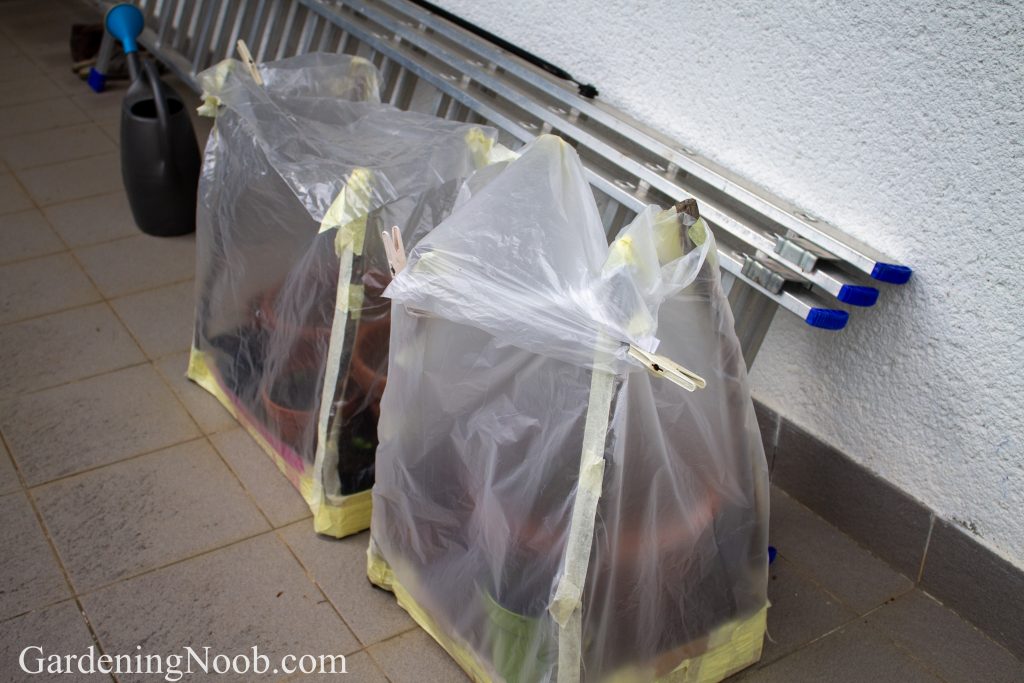
So, later on in spring of the same year, I built my first two miniature greenhouses. I used a cardboard box for the base and tree branches for the sides. I then draped everything in a plastic film I found at home and secured it with masking tape. The tape started to peel off soon, so I had to use clothespins to keep things from falling apart.
This was a very basic do-it-yourself project, so straightforward that even a child could replicate it in an afternoon. It’s not surprising then that my first two miniature greenhouses didn’t last beyond that season. What did surprise me, though, is that they actually worked…
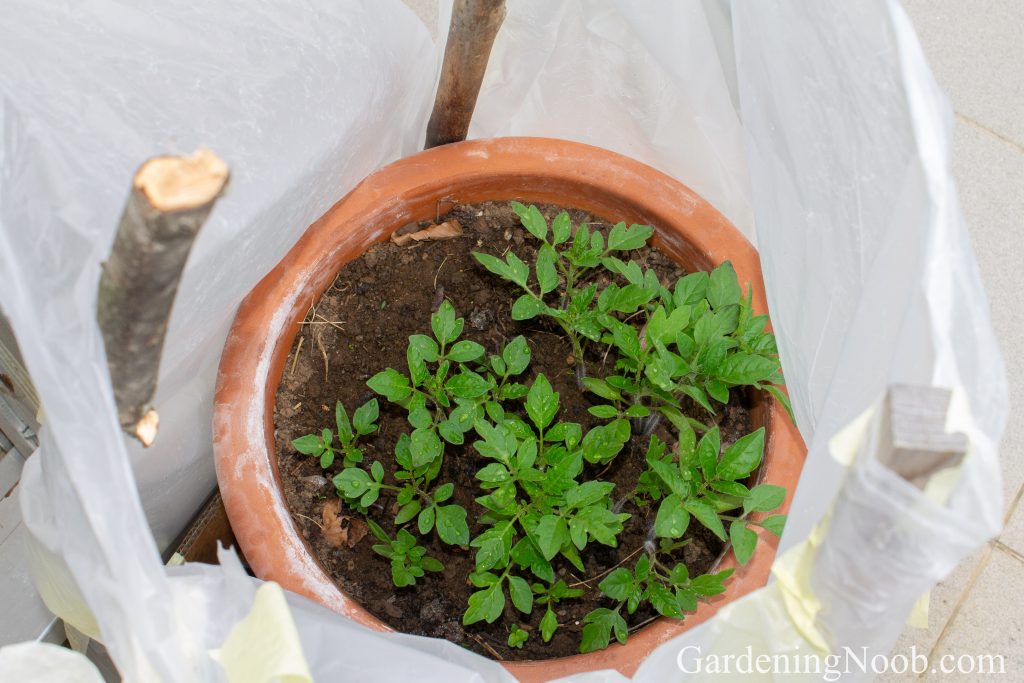
You see, I placed pots sown with tomato, squash and zucchini seeds inside them. It took a while, but the seed sprouted and turned into the plants. Sure, I lost a few tomatoes every now and then to damping-off, but most of them kept growing despite the cool spring weather. By transplant time, they obviously weren’t as big as I would have wanted, but I was thrilled nonetheless. I had managed to raise warm-season vegetable plants from seeds outside despite the fact that the weather was still too cool for them!
Over the next few years, I built four more miniature greenhouses with each one being better than the previous ones. But it was the fifth and the sixth that came close to perfection. These two were slightly larger, had a much better insulated base, a fully functional lid and a professional-grade covering film. I still use them regularly during winter, spring and autumn and they are almost as good as when I built them.
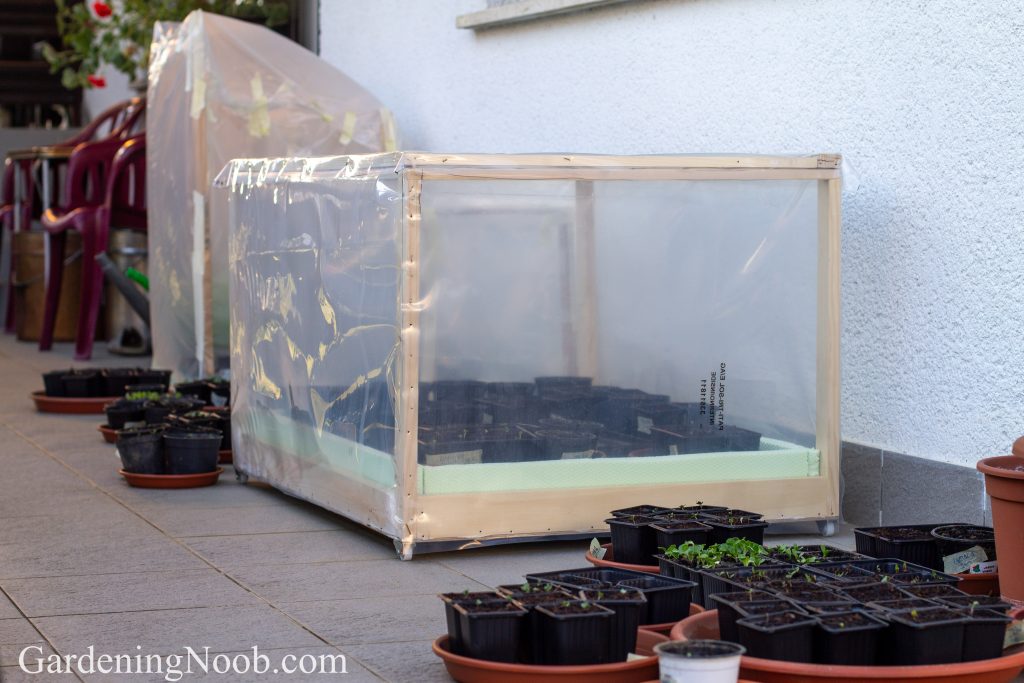
You can grow both cool-season and warm-season vegetable seedlings in them, but…
Every year, I open my outdoor vegetable seedling raising season early in spring. It is usually at the beginning of March, and sometimes even earlier. In this early spring stage, the weather can be very unpredictable, the days are often sunny and cool at most, but the nights remain freezing cold…
At this point, I don’t germinate seeds in the miniature greenhouses. I only use them to shelter and continue growing well-established (!) cool-season vegetable seedlings that I start indoors under grow lights prior to that from seeds. This includes cold-hardy varieties of brassicas such as cauliflower, broccoli, cabbage, kale, kohlrabi and rutabaga. Leafy greens like lettuce, chard and spinach can handle cold too, and so can leeks, beetroot, parsley and chives.
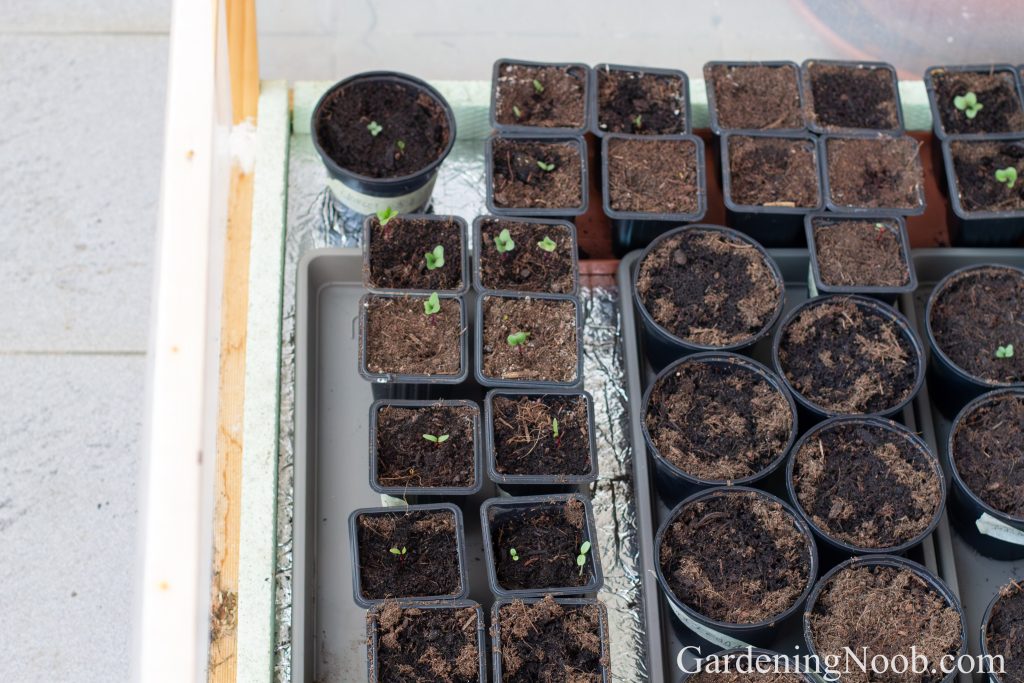
By mid spring, which here in Slovenia falls around the end of March and the beginning of April, the days become even warmer and night temperatures seldom approach the freezing point. At that point, I can start using the miniature greenhouses for germination of cool-season vegetable seeds. The seeds germinate slower than inside, but they do germinate, and the emerging sprouts then slowly and surely grow into strong and healthy plants.
In late spring, somewhere from mid-April to mid-May, the days become almost summer-like and the nights are cool at worst. That is when I usually move all the cool-season vegetable seedlings out of the miniature greenhouses. I replace them with less cold-hardy cool season vegetable seedlings (celery and celeriac), as well as with well-established warm-season vegetable seedlings such as tomatoes and eggplants. I even put well-established bell peppers in if the night temperatures stay above 10 degrees Celsius (50 degrees Fahrenheit).
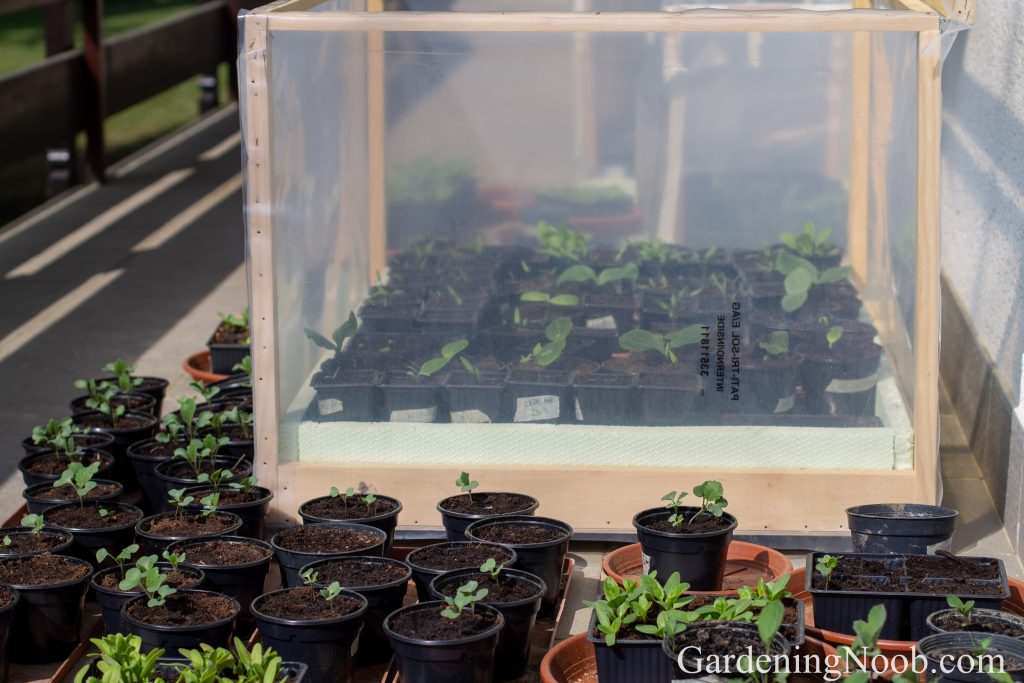
If I run out of indoor growing space (I always do), I also start zuchinnis, squash and cucumbers from seeds directly in the miniature greenhouses. These vegetables are quick to germinate and don’t mind a bit cooler temperatures every now and then. I do it towards the end of May when the last predicted frost is only weeks away.
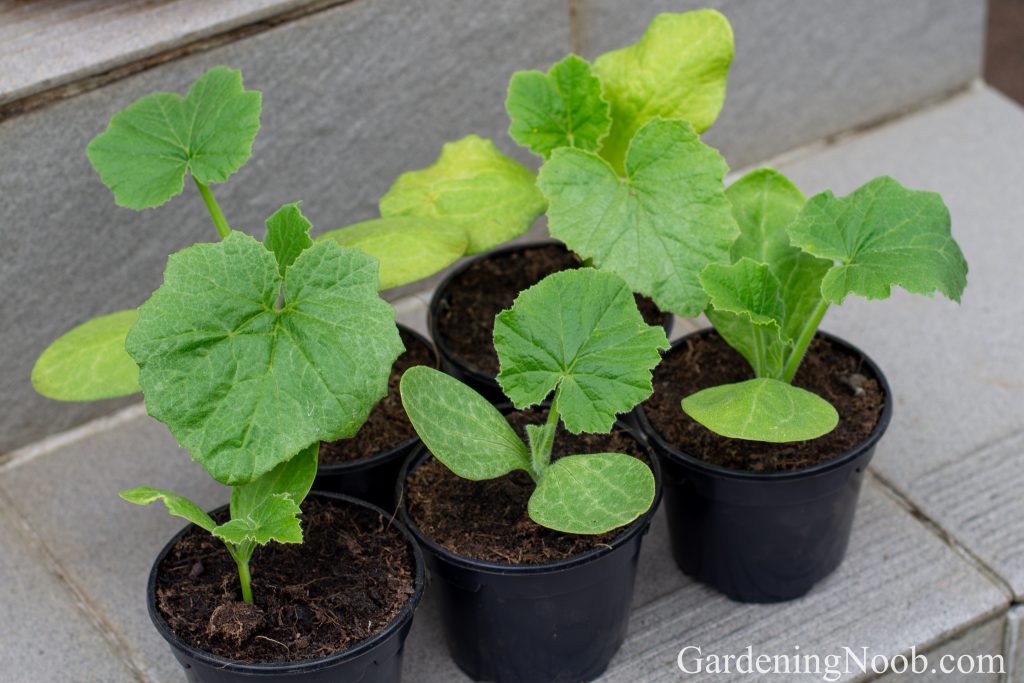
…they are not perfect as a cold protection for plants.
While the miniature greenhouses do work as a cold protection for plants, they are far from being perfect. You need to use them without caution and be well aware of their limitations:
- They fall short in extreme cold weather. Even well-established cool-season plants may struggle in them when air temperatures drop below or hover around freezing point for several days or weeks.
- It can be difficult to grow young, only days-old cool-season vegetable sprouts as well as well-established warm-season plants in them, even if it is merely cool outside and not freezing. The plants are likely to survive the cool spring weather, but these conditions will slow down their growth and make them more prone to plant diseases, such as damping-off.
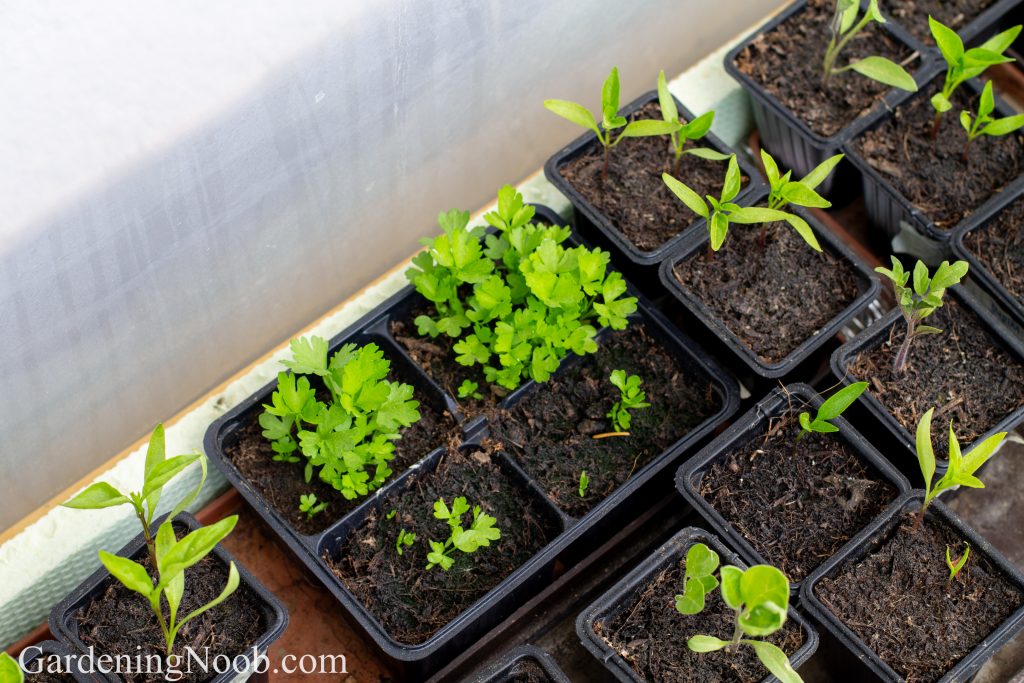
I take additional precautions when the night temperatures drop well below freezing point or when there is frost or cold spell in the weather forecast. I cover the cold-hardy plants with cold and frost blankets. I bring the more sensitive plants indoors, at least over the nights, and keep them there until it becomes warmer again. It takes more work, but it means that I don’t lose the plants.
The location is cruical too. I keep my mini greenhouses on a south-facing, rain-shielded balcony which is naturally sheltered from cold northern winds. I have placed them near the walls. The walls absorb some heat during sunny days and then radiate it back into the surroundings at night. It is not a significant amount of heat, but every bit helps.
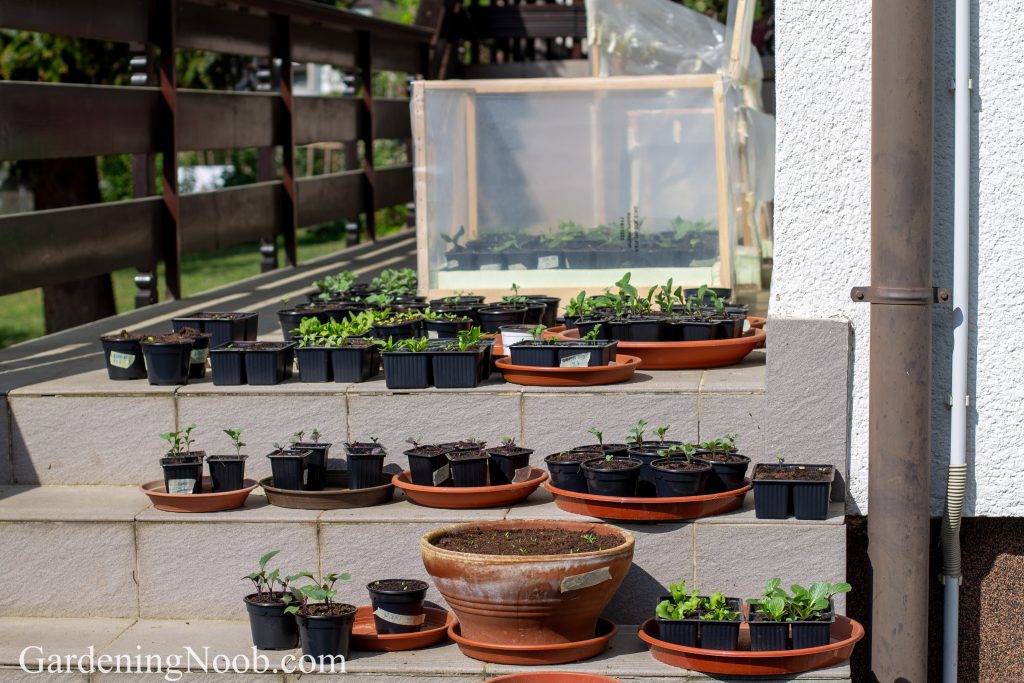
Now, there is a way to make miniature greenhouses even more resistant to cold, possibly even cold-proof. I could place a heating pad beneath the pots and connect it to an electrical source through a termal switch. This switch would turn on the heating pad automatically whenever the temperature inside the greenhouse fell below a certain treshold. With this setup, the plants inside would stay warm even if the air outside was freezing cold. However, I have never tried this due to safety concerns – particularly the risk of fire. I would try it only after consulting with safety expert to ensure that everything is safe and fireproof.
Don’t forget to open them on sunny and warm spring days to prevent overheating!
A well-built and properly insulated miniature greenhouse can help protect your vegetable plants from that cold weather which is typical for early spring and sometimes even for mid spring. However, as the weather starts warming up, the heat can be just as bad as the cold…
You see, when the sun shines directly on a closed greenhouse, it quickly gets extremely hot inside. So, make sure to keep the lids open during those sunny mid-to-late spring days, when the weather outside is almost summer-like. Otherwise, you might lose all your plants in one afternon!
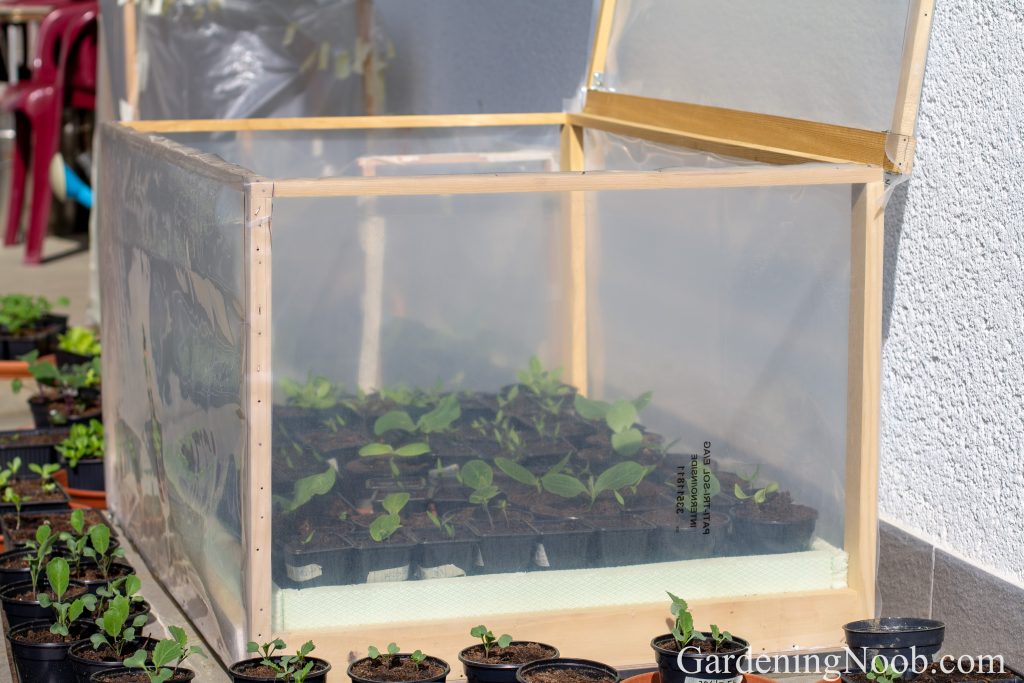
I lost dozens of plants to such overheating. Twice. The first time, I didn’t realize it was happening until it was too late. The second time, I was well aware of the risk, but I didn’t secure the lid properly and the wind shut it without me noticing. In both instances, the plants inside wilted to death.
With that said, I try to keep the miniature greenhouses open as often as I can, even on cloudy and cool days too, regardless of the season, as long as it is not too cold for the plants. I do it to ventilate the inside of the miniature greenhouses and let any condensed water to escape. It not only prolongs the lifespan of greenhouse, but also significantly reduces the risk of plant diseases and helps plants get in tune with local climate.
The conclusion
I love miniature greenhouses. They play a cruical role in my vegetable seed starting process. Without them, it would not be possible for me to grow as many vegetable seedlings as I do now – at least not in the first half of spring when the weather is often still wintry-like. But they don’t just protect from cold, the plants grow faster inside them, too.
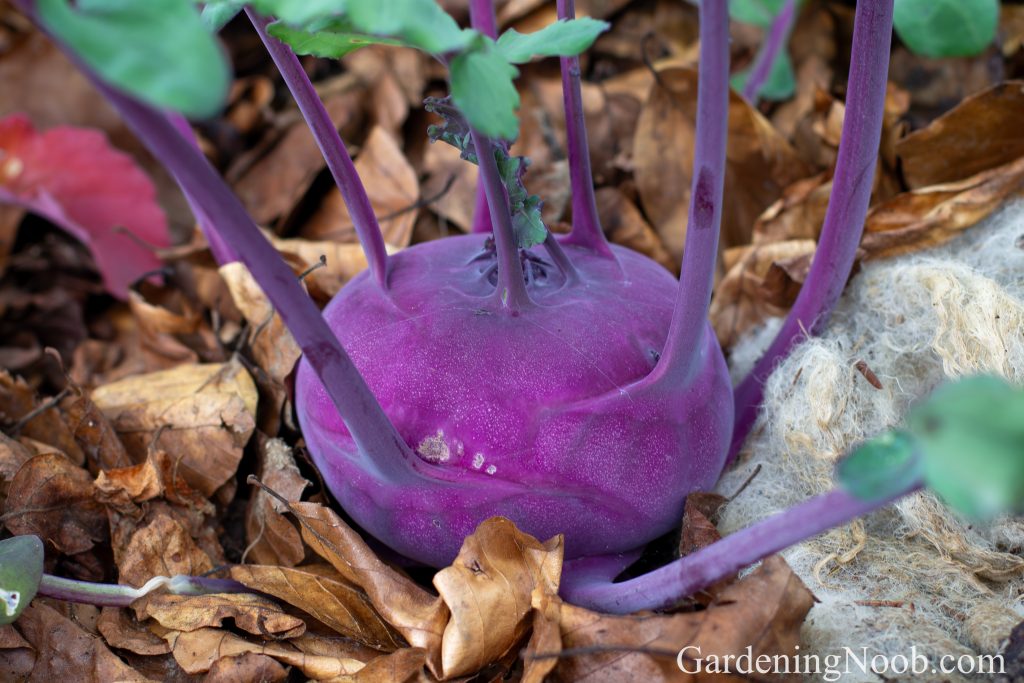
However, it is important to be aware of both their strengths and weaknesses, and how these strengths and weaknesses fit with your local climate…
For example, growing bell and chilli peppers from seeds in the miniature greenhouses alone doesn’t work well for me here in Slovenia. These vegetables need consistently warm temperatures to sprout and are extremely sensitive to cold. Plus, they grow very slowly and need plenty of time to reach the transplant-ready size. So, to have them ready by the end of May, when it is typically safe to move them to the garden, I would need to start them as early as mid-February. This means they would have to endure freezing temperatures, frost and cold spells for a full three months!
I tried it once in year 2020. I planted the seeds indoors in the beginning of April – which was already quite late – and moved the sprouts to the miniature greenhouse as soon as they emerged. The spring in that year was unusually warm (the nights were cool at most), but those bell and chilli peppers grew very slowly. They were still tiny when it was time to transplant them.
On the other hand, I have seen great success with cool-season vegetable plants, particularly with the cold-hardy varieties. What’s more, I can even grow lettuce in winter in them!
This pretty much covers how I use miniature greenhouses to protect the vegetable seedlings I grow outside from the cold. If you like the idea and have the right space for it, then definitely try it. It’s not difficult to built one from scratch either – even if DIY is not your strong suit. Remember, it took me four tries to perfect mine, and I still have room for improvements. Now, head back to vegetable seed starting guide to find more about the way I grow my own vegetable seedlings from seeds.