
• Skip to primary navigation
  • Skip to main content
  • Skip to primary sidebar
  • Skip to footer
GardeningNoob.com

GardeningNoob.com

Organic vegetable gardening for beginners

  • Vegetable Seed Starting Guide
  • Free ebook
  • Blog
  • About me

The shelf life of musquee de provence pumpkins

Published on February 4, 2024

The fruits of homegrown “Musquee de Provence” winter squash variety can have a shelf life of more than four months when stored whole, uncut and undamaged
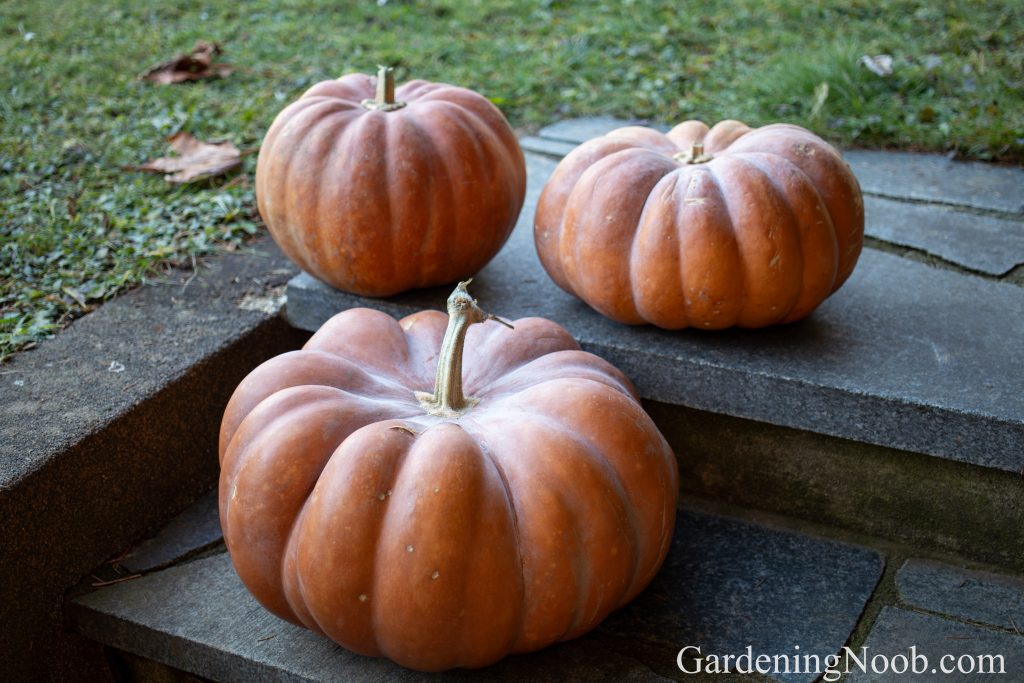
I picked these three Musquee de Provence pumpkins towards the end of September in 2023. It was January 27th, 2023, when I took this photo, and as you can see, they were still in good, edible condition despite being stored for several months!

The Musquee de Provence pumpkin (also known as the fairytale pumpkin or muscat pumpkin) was one of the four winter squash varieties we grew last season. I started it from seeds, and once the risk of frost had passed, I transplanted the plants to the allotment โ€“ in a thick layer of compost…

The season brought plenty of rain, and even two hailstorms, with one being particularly damaging. The plants handled the rain well and they even recovered from the hailstorms, but they did begin to deteriorate earlier than in previous seasons. I guess all that excessive rain and the resulting moisture were too much for them in the end after all.
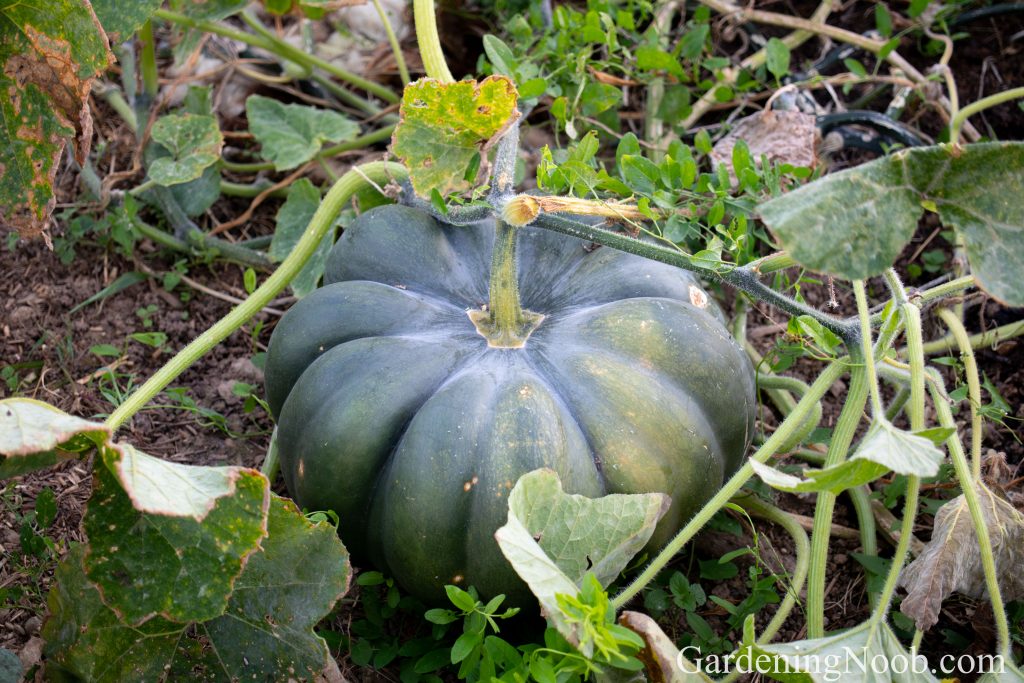
The last growing season was exceptionally rainy. The constant rain innitially helped the plants get established, but it eventually took a toll on them. After enduring damp growing conditions for months, the plants started to rot and deteriorate. Since I didn’t want the fruits to go to waste too, I decided to pick them, even though they were still partly unripe. Photo taken on 17th of September in 2023.

Despite the challenging weather, we enjoyed a bountiful harvest โ€“ and the Musquee de Provence pumpkin stood out as the most productive variety. It produced the largest and heaviest fruits. The majority of them weighed about five kilograms (11 pounds) each which is a lot of vegetable for a family of three. It took us nearly a week of daily meals (soups, sauces and whatnot) to finish eating just one pumpkin!

Store them in a dry and well-ventilated place with a constant room temperature
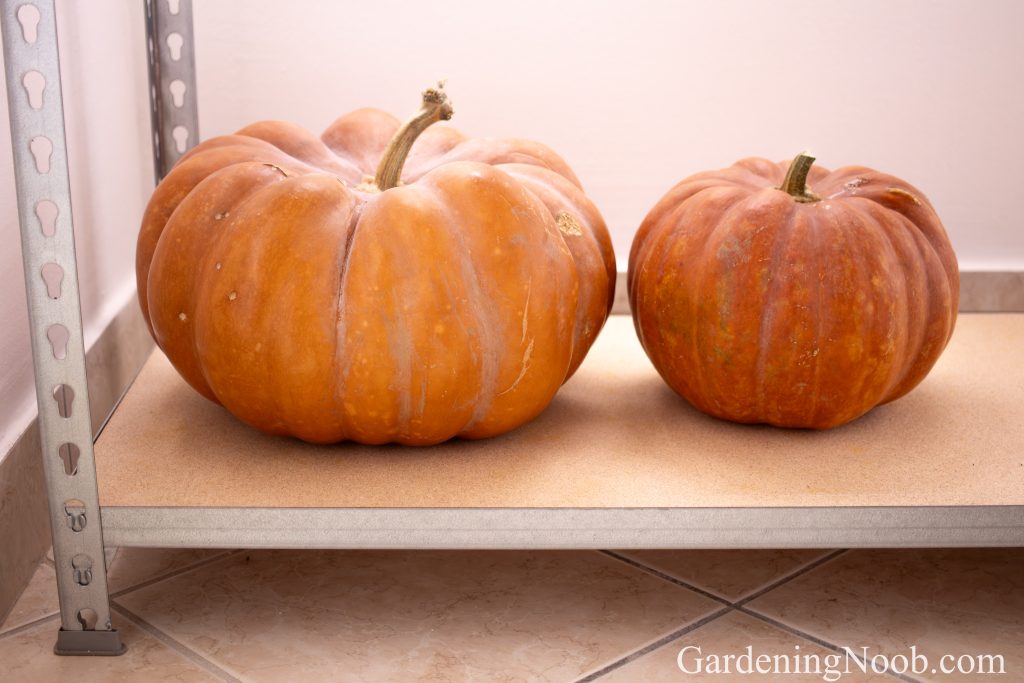
We kept our surplus fruits stored on shelving racks for over four months. When I first shelved them, they still had that dark green color which indicated they weren’t completely ripe. Considering this now, the fact that they weren’t fully ripe at the time might have actually helped them last longer!

By the end of September, when the fruits of Musquee de Provence variety slowly started to reach maturity, we had already been enjoying squash on a weekly basis โ€“ thanks to the earlier yields from the Red Kuri variety. As much as we love this type of vegetable, we got tired of eating it every week and just couldn’t continue to do it so frequently. So, we shared some with friends and family and stored the rest…

There was nothing special about the way we stored the fruits. We simply kept them whole and uncut in a dry and well-ventilated room where the temperature remains fairly constant at around 20 degrees Celsius (68 degrees Fahrenheit). Now, before I shelved them, I did leave them outside in the open (but protected from the rain) for about a week. I did it because it was a very rainy growing season and I was afraid that they might start rotting much earlier if I don’t dry them out a bit more before storing them.

It has now been more than four months since then and we still have three of those squash left. They are still in good, edible condition and are waiting for us to use them. We ate the others throughout autumn and winter, and I can honestly say that their sweet smell and taste get more pronounced over time!
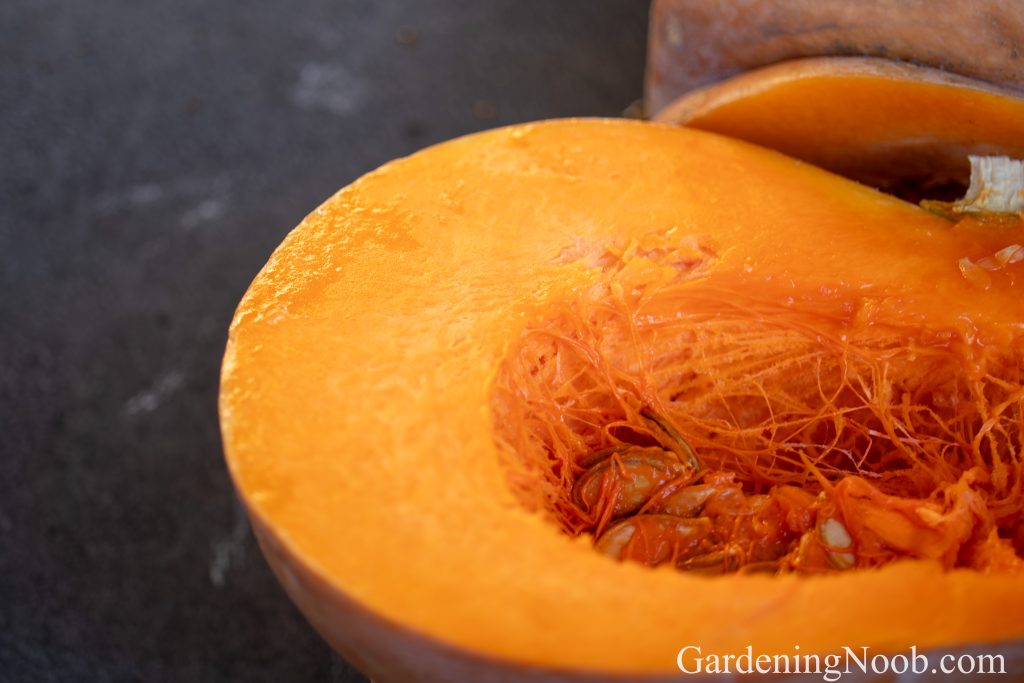
There is something magical about enjoying a homemade squash soup made from the homegrown Musquee de Provence pumpkin during winter. It is no wonder then that this squash variety is also called the Fairytale pumpkin. I have noticed that its flesh becomes even juicier, richer, and sweeter with time. However, it’s best not to store it for too long. It may start to rot faster than you think. Or it could get dry inside. Photo taken on 27th of January in 2024.

What’s also interesting to note is that we stored a few fruits that weren’t fully matured when picked. Those then slowly matured on the shelves. Their color gradually turned from dark green to orange and cinnamon brown.

Check them weekly for signs of rotting

A word of caution, though. If you plan to store this pumpkin variety (or any other winter squash variety) for a longer period of time, I strongly recommend checking each one thoroughly at least once a week. That extra drying tactic may have worked on some of the stored fruits, but it definitely didn’t work on all of them…

You see, one of the fruits we stored began to show signs of rot about a month or two later. It appeared fine on the outside when I first stored it, but I guess that the damp growing conditions and the hailstorm damage were just too much for it. Luckily, we noticed it early enough to save it. We just cut off the bad parts (I threw those on the compost pile together with the skin) and ate the good parts.
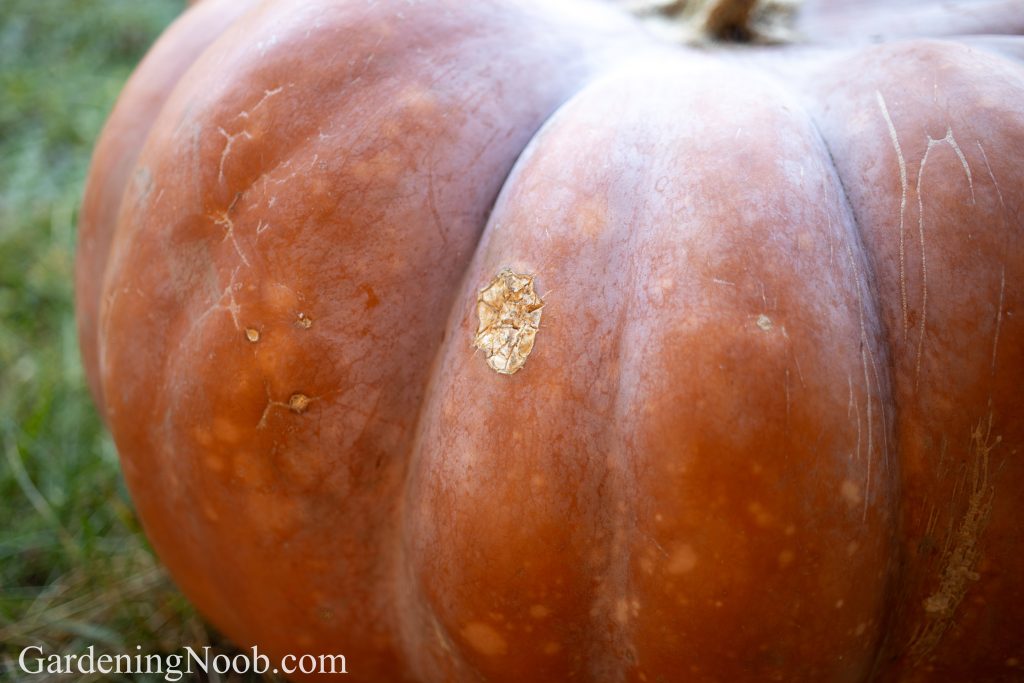
Our ‘Fairytale’ pumpkins were all visibly damaged by two hailstorms. You can clearly see the impact points on the fruits. Although the plants recovered and the fruits continued to grow, the scars remained. If for some reason, you find yourself with damaged fruits (as we did), I strongly recommend you keep a close eye on the damaged spots. They are often the first place where spoiling begins.

So, hailstorm damage, or any other mechanical damage, can greatly reduce the shelf life of squash. That seems to be particularly true if the plants were growing in a damp conditions. If you don’t notice it early enough, you may end up having to discard the entire fruit.

They are an excellent way to preserve some of the homegrown produce for winter
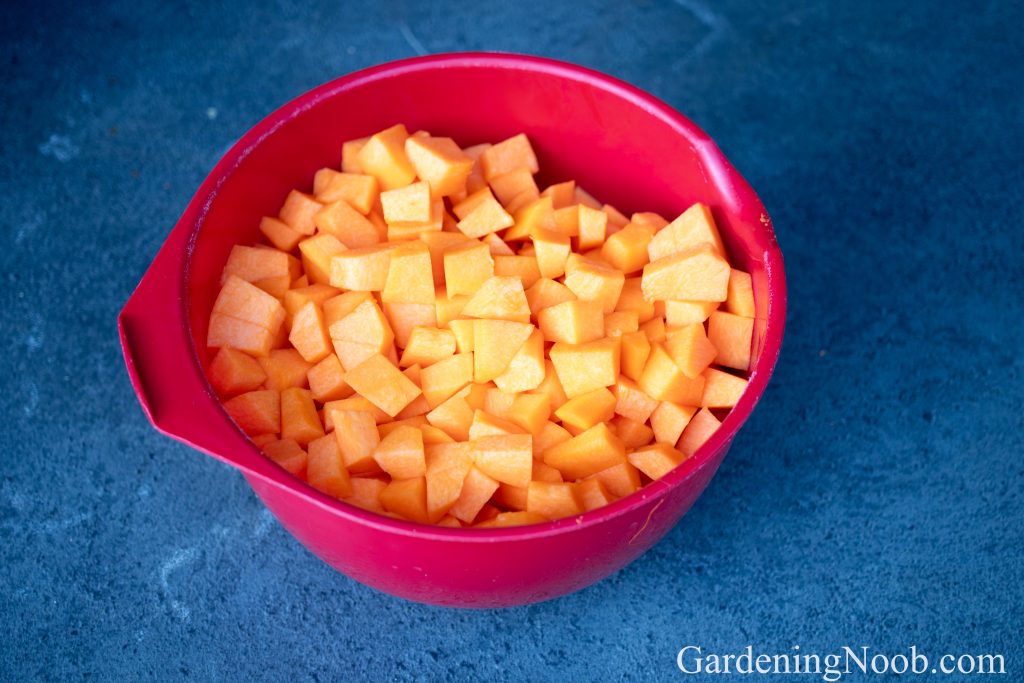
We usually cube our squash and then make soup or gravy out of it within a day or two. This year, however, due to the abundance of Musquee de Provence pumpkins, we have started freezing some of the cubes too. Our largest pumpkin weighed about 10 kilograms (22 pounds). Eating such large quantities in a short period can be challenging, so freezing has turned out to be a good solution. But I guess it is time to try some new recipes too!

During the growing season, we try to freeze as much of our homegrown produce as we can for colder months. It is usually bush beans, sweet peas, rutabaga and zuchinnis. But despite this, when winter arrives, we still have to buy the majority of our vegetables in supermarkets or at the farmer’s market. This winter, however, was a bit different…

Thanks to the Musquee de Provence pumpkins, we haven’t had to buy any squash yet! I am impressed with how long this winter squash variety can last after you pick it. They are perfect for preserving some of the homegrown vegetables for winter when fresh vegetables from our own garden are scarce. We definitely plan to grow this variety again in the future!

Primary Sidebar

Recent blog posts

  • Why This Strawberry Plant Produced Fruit in a Small Pot
  • Why One Chili Seedling Grew Bigger Than The Rest
  • What To Do When Chili Seedlings Start Flowering Too Early
  • How I Save Severely Wilted Vegetable Seedlings Fast
  • What a Perfect Homegrown Lettuce Seedling Looks Like

Stay in touch!

  • Facebook
  • Instagram
  • Pinterest
  • Twitter
  • YouTube

Footer

Articles

  • Soil preparation for leafy greens
  • Pot marigolds
  • Chard
  • When & How To Plant Chard
  • How To Start Chard Seeds Indoors
  • How To Grow Chard In Pots And Containers
  • How To Care For Chard Until The Harvest
  • When And How To Harvest Chard
  • How To Prepare The Garden For Growing Pot Marigolds?
  • When And How To Plant Pot Marigolds?
  • How To Care For Pot Marigolds?
  • When And How To Pick Pot Marigolds?
  • How To Collect And Store Pot Marigold Seeds
  • How To Prepare The Garden For Growing Arugula
  • When To Plant Arugula?
  • How To Plant And Grow Arugula
  • When To Plant Spinach?
  • When To Plant Or Sow Lettuce
  • About me
  • How To Use Sheep Wool In The Vegetable Garden
  • How To Plant Lettuce In The Garden
  • Free Vegetable Seed-Starting Ebook for Beginners
  • How To Germinate Vegetable Seeds In Wet Paper Towel
  • Vegetable Seed Starting Guide
  • The Pros And Cons Of Vegetable Seed Starting
  • Miniature Greenhouses As Cold Protection For Vegetable Plants
  • My Indoor Vegetable Seed Starting Setup
  • SANlight EVO Grow Lights Review
  • How To Propagate Strawberry Runners Into New Plants
  • Where To Grow Vegetable Seedlings From Seed Outside
  • How To Grow Lettuce in Pots
  • How Long Do Lettuce Seedlings Take To Grow?

Blog posts

  • Why This Strawberry Plant Produced Fruit in a Small Pot
  • Why One Chili Seedling Grew Bigger Than The Rest
  • What To Do When Chili Seedlings Start Flowering Too Early
  • How I Save Severely Wilted Vegetable Seedlings Fast
  • What a Perfect Homegrown Lettuce Seedling Looks Like
  • Can you grow radish from seeds indoors?
  • The shelf life of musquee de provence pumpkins
  • Is summer a good time to plant kohlrabi?
  • The winter lettuce sowing experiment
  • What I Learned About Growing Squash This Year
  • My parsley seed collecting and saving project
  • Two surprising facts about parsnip
  • The best squash harvest ever
  • The help from the compost heap
  • This year’s self-seeders
  • The vertical dimension in my garden
  • Does sheep wool work in vegetable gardening?
  • The new gardening season begins…
  • Why I now like chard even more…

Useful Links

Privacy Policy

Stay in touch!

  • Facebook
  • Instagram
  • Pinterest
  • Twitter
  • YouTube

Copyright © 2026 ยท

I am using cookies to give you the best experience on my website.

You can find out more about which cookies I am using or switch them off in .

GardeningNoob.com
Powered by  GDPR Cookie Compliance
Privacy Overview

This website uses cookies so that we can provide you with the best user experience possible. Cookie information is stored in your browser and performs functions such as recognising you when you return to our website and helping our team to understand which sections of the website you find most interesting and useful.

Strictly Necessary Cookies

Strictly Necessary Cookie should be enabled at all times so that we can save your preferences for cookie settings.

3rd Party Cookies

This website uses Google Analytics to collect anonymous information such as the number of visitors to the site, and the most popular pages.

Keeping this cookie enabled helps us to improve our website.